There’s a certain kind of person who, when faced with an opportunity that doesn’t perfectly match their background, says yes anyway. Not out of recklessness, but out of a quiet belief that figuring it out is part of the deal. They don’t let the gap between where they are and where they need to be become a reason to step back. They treat it as the work itself.
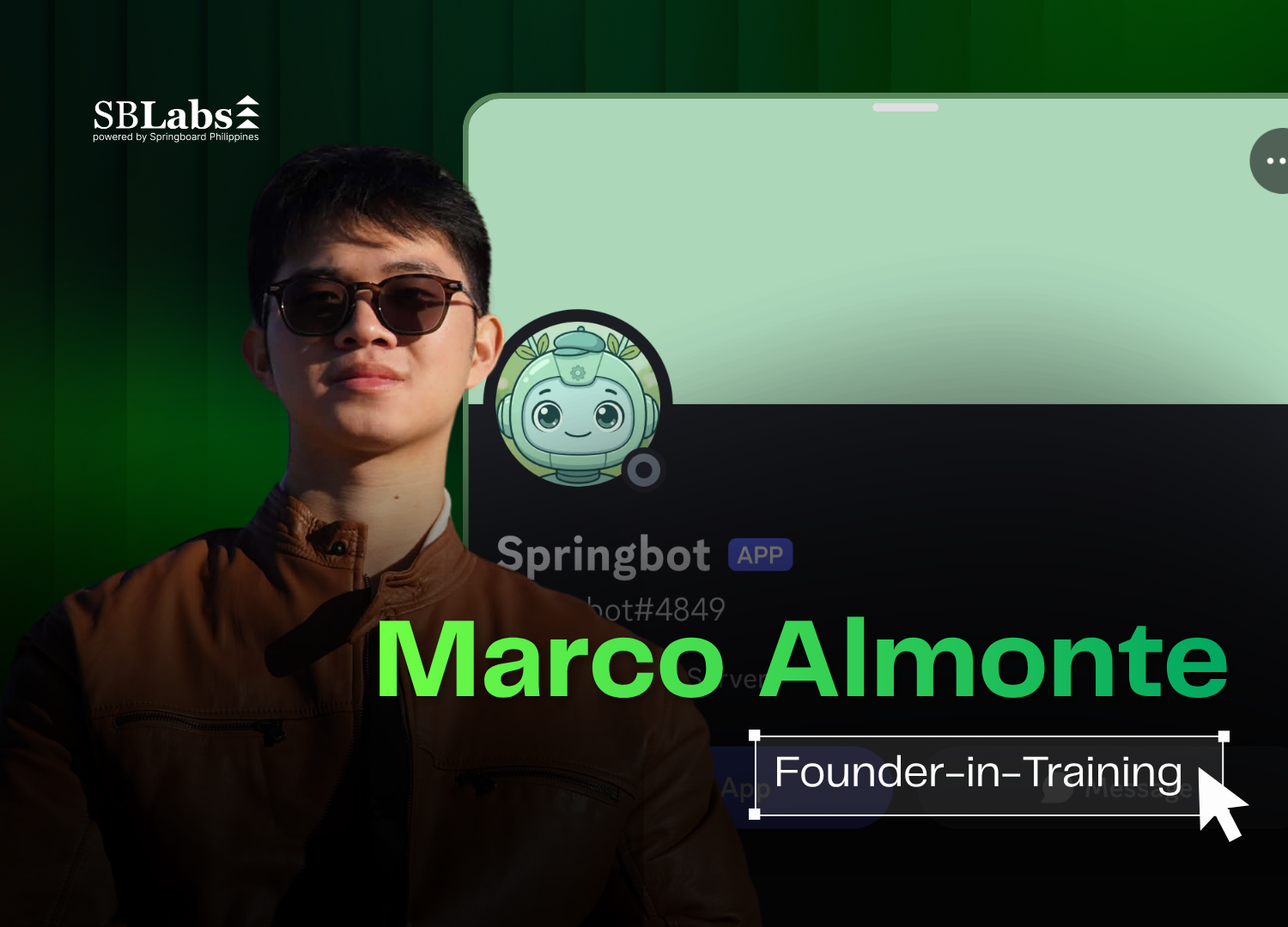
Drix Marco C. Almonte is a 3rd-year BS Management of Financial Institutions student at De La Salle University. He serves as an officer in both a finance and a startup-related organization at DLSU, and outside of school, you’ll find him at the gym, on the tennis court, or planning his next trip. He describes himself in three words: down for anything. It turns out, he means it.
Business has always been the direction. Finance came later, not as a passion but as a foundation, a set of fundamentals he knew would matter when it was time to build something of his own. It was through a hackathon that he first connected with Springboard, and when the chance to intern there came up, the fit was clear: a real startup, a founder who had actually built something. He said yes.
What followed was less of a typical internship and more of a series of problems that needed solving. Marco had no programming background coming in. What he had instead was the ability to look at how a team operates, spot where things were slipping, and find a way to do something about it.
One of those gaps was communication. In a fast-moving team, important decisions get made in passing conversations, updates get buried in chat, and it becomes genuinely hard to know at any given moment who’s working on what and what’s falling behind. Marco built Springbot to address exactly that. What began as a simple tool that posted a daily summary of team activity grew into something the whole team now depends on. Springbot sits between the team’s Discord conversations and their project management board, quietly doing the work of keeping everyone aligned: surfacing project updates, answering plain-language questions about workload and progress, catching decisions that were made in chat but never officially tracked, and flagging tasks that are overdue or going stale. It doesn’t replace the team’s judgment. It just makes sure nothing important gets lost in the noise.
The second problem was leads. SyncTalents, a Philippine staffing company, needed a smarter way to identify businesses that were actively hiring and therefore most likely to need staffing support. Marco built Scrapebot to do exactly that, an automated pipeline that continuously scans a government jobs portal for active job postings, identifies the companies behind them as warm leads, and then goes a step further by tracking down each company’s contact details. Everything gets cleaned, deduplicated, and written into a live Google Sheet ready for outreach, with a strict rule built in: if the information isn’t there, the field stays blank. No guesswork, no filler. A second phase of the tool, powered by OpenClaw, takes it even further, allowing the entire pipeline to be triggered on demand from a single Telegram message. What used to require manual searching across multiple platforms now runs at the tap of a button. He also contributed to LEDGR, translating the logic behind accounting workflows into clear specifications that the development team could build from, making sure the financial side of the product made sense before a single line of code was written for it.
His one word for the internship: adapt. Not survive, not endure. Adapt, which implies something more active, a continuous process of finding where you fit and making yourself useful there.
It connects to something he’s been sitting with lately: to receive, you must first give. Showing up fully before the return is guaranteed. Contributing before you’re certain you belong. His advice to anyone on the edge of a similar decision is just as direct: step out of your comfort zone and say yes while you still have the time and space to learn. Don’t pass on great opportunities because of things you think you can’t do yet. The learning doesn’t happen before the yes. It happens because of it.
Get to know Marco more by reading this blog and connecting with him through his LinkedIn.
Looking to build real-world tech solutions with emerging talent? Partner with Springboard and turn ideas into working MVPs.